
- Venue Boston Marriott Peabody, MA
- Dates November 16-18, 2026
- Call +1-659-226-7797

Speakers
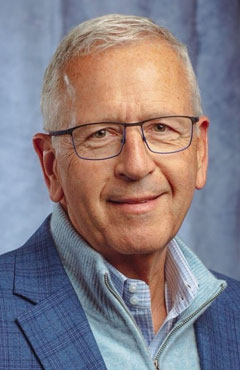
Joseph M. DeSimone
Ph.D.- Speciality: Sanjiv Sam Gambhir Professor of Translational Medicine and Chemical Engineering
- Company: Canary Center at Stanford University
- Designation: Co-Director
Personal Information
Joseph M. DeSimone is the Sanjiv Sam Gambhir Professor of Translational Medicine and Chemical Engineering at Stanford University. He is also Co-Director of Stanford’s Canary Center (https://canarycenter.stanford.edu/), the founding Faculty Director of the Center for STEMM Mentorship at Stanford (https://stemmteams.stanford.edu/), and the Interim Vice Chair of Strategy in the Department of Radiology at Stanford. He holds appointments in the Departments of Radiology and Chemical Engineering with courtesy appointments in Chemistry, Materials Science and Engineering, and Stanford’s Graduate School of Business. Previously, DeSimone was a professor of chemistry at the University of North Carolina at Chapel Hill and of chemical engineering at North Carolina State University. He is also Co-founder, Board Member, and former CEO (2014 - 2019) of the additive manufacturing company, Carbon.
DeSimone has published almost 400 scientific articles and is a named inventor on approximately 250 issued patents. He has mentored 81 students through Ph.D. completion in his career, half of whom are women and members of underrepresented groups in STEM. In 2016 DeSimone was recognized by President Barack Obama with the National Medal of Technology and Innovation, the highest honor in the U.S. for achievement and leadership in advancing technological progress.
DeSimone is responsible for numerous breakthroughs in his career in areas including green chemistry, medical devices, nanomedicine, and 3D printing, also co-founding several companies based on his research. In the 1990s he and students invented a green manufacturing process for the synthesis of fluoropolymer materials that eliminated so-called “forever chemicals” like PFAS, which was only partially commercialized by DuPont. In the mid-2000s, DeSimone and students developed a nanoparticle manufacturing platform rooted in an imprint lithography-based r2r process, PRINT (particle replication in non-wetting templates)—the first technology to enable large-scale fabrication of uniform nanoparticles for medicine with independent control over particle features such as size, shape, and composition. Based on PRINT, DeSimone co-founded Liquidia Technologies (NASDAQ: LQDA), which has multiple clinical products. DeSimone’s lab published a large body of research using PRINT to study how specific particle features influence biological processes and to advance the design of vaccines.
More recently, DeSimone and team invented a revolutionary 3D printing technology, CLIP (continuous liquid interface production). CLIP eliminates the slow, layer-by-layer construction seen with other polymer 3D printing approaches to enable parts to ‘grow’ continuously and rapidly from a pool of liquid resin. CLIP delivers production-grade parts comparable in performance to injection molded parts. Based on CLIP, DeSimone co-founded, and was the CEO of for six years, Carbon, Inc., now a global digital additive manufacturing company helping to advance product innovation in numerous industries, including medical, dental, footwear, automotive, and aerospace. CLIP is also used by many academic laboratories to advance research in areas including medical devices and implants.
DeSimone has received numerous recognitions for achievements in science, engineering, invention, and business. In addition to the U.S. National Medical of Technology and Innovation, these include the U.S. Presidential Green Chemistry Challenge Award (1997); the American Chemical Society Award for Creative Invention (2005); the Lemelson-MIT Prize (2008); the NIH Director’s Pioneer Award (2009); the AAAS Mentor Award (2010); the Kabiller Prize in Nanoscience and Nanomedicine (2015); the Heinz Award for Technology, the Economy and Employment (2017); the Wilhelm Exner Medal (2019); the EY Entrepreneur of the Year Award (2019 U.S. Overall Winner); and the Harvey Prize in Science and Techonlogy (2020). He is an elected member of the American Academy of Arts and Sciences one of approximately 25 individuals elected to all three branches of the U.S. National Academies (Sciences, Medicine, Engineering). DeSimone received his B.S. in Chemistry in 1986 from Ursinus College in Collegeville, PA and his Ph.D. in Chemistry in 1990 from Virginia Tech.
Scientia Meetings
Connecting Minds for Scientific Progress!
Join us in revolutionizing conferences! Scientia Meetings is launching events across the country, offering a unique platform for scientists and researchers to share knowledge, explore innovative ideas, and foster collaborations. Buy Ticket
Clients
Our Official
Our Official
Sponsors
Our curated gatherings ensure purposeful networking, creating opportunities tailored to your needs. Let's shape the future together—where knowledge connects, opportunities arise, and science thrives!
Buy Ticket


Get The Latest Updates
Signup For Newsletter
If You Want to Update For on Our Site a#Subscribe Now.